1
/
of
4
Forest Of Wolves
Hebrew Orphan Asylum
Hebrew Orphan Asylum
Regular price
$72.00 USD
Regular price
Sale price
$72.00 USD
Unit price
/
per
Couldn't load pickup availability
Mid-heavy weight, 10.3 oz, 80% cotton 20% recycled polyester anti-pill CVC fleece
Construction sleeve cuff ribbing, preshrunk to minimize shrinkage.
The Hebrew Orphan Asylum of New York, founded in 1860 by the Hebrew Benevolent Society, emerged as one of the most influential Jewish charitable institutions in the United States. It began in a small three story house on West 29th Street and was created to care for Jewish children facing poverty, illness, and the instability surrounding immigration. From its earliest years, the Asylum took in both Sephardic and Ashkenazi children, reflecting the full diversity of New York’s growing Jewish community.
Over more than eight decades of operation, the Hebrew Orphan Asylum cared for over 30,000 children, making it the largest Jewish orphanage of its time. During the peak years of immigration through Ellis Island, an estimated 20–30% percent of its residents were newly arrived immigrants fleeing Pogroms children whose families were unable to support them after landing in America. The Asylum became a central institution in shaping American Jewish life, providing education, structure, and cultural continuity to generations of children whose lives had been profoundly disrupted.
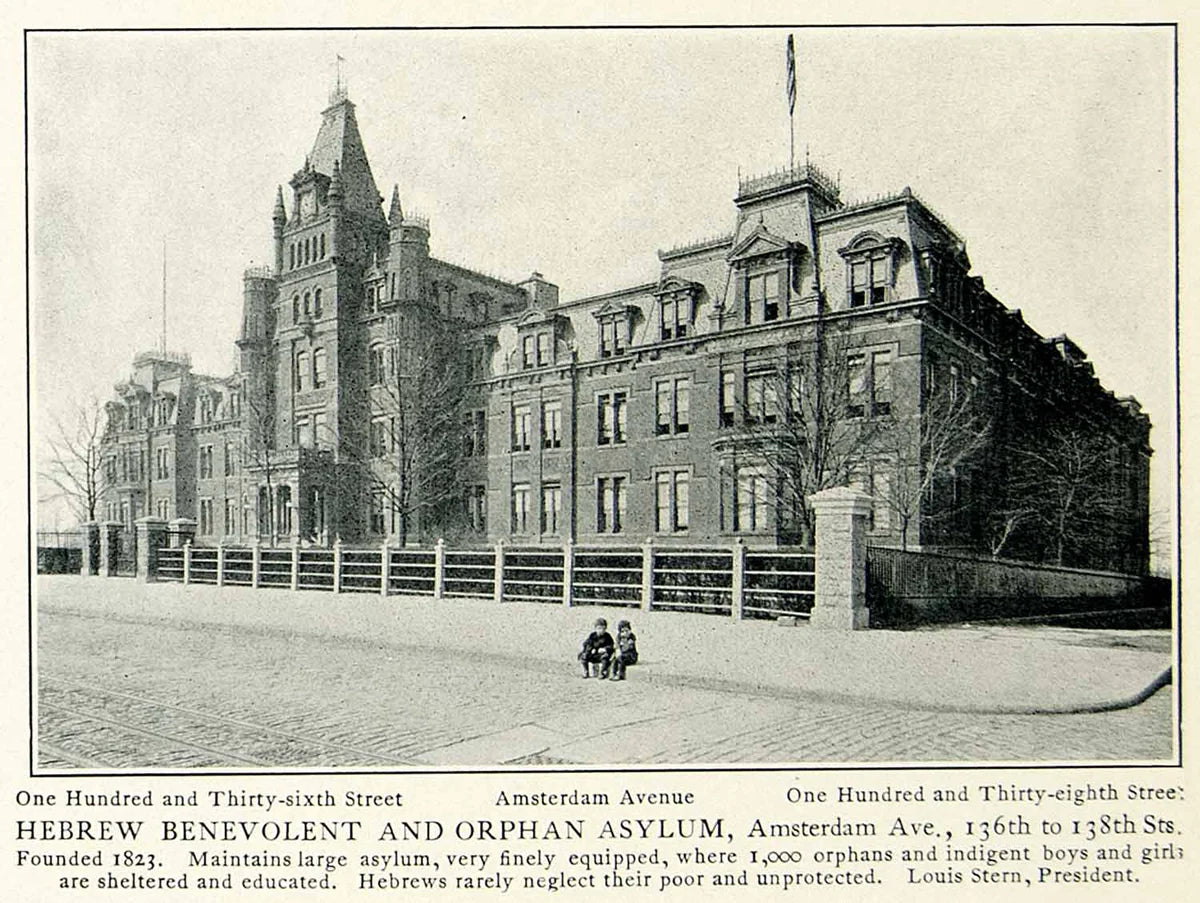
A pivotal moment in the institution’s history occurred in December 1884 when it moved from its original cramped residence into a massive, purpose built brick complex on Amsterdam Avenue. This relocation marked the Asylum’s transformation from a small refuge into a cornerstone of American Jewish social infrastructure, influencing child welfare practices across the country.
The Asylum’s seal, featuring the Star of David surrounding the twin tablets, symbolized its mission to protect and educate Jewish children while grounding them in their heritage.
We’re doing a limited run of commemorative sweaters recognizes the anniversary of the December move, promoting awareness and respect for the children whose lives passed through its halls, and honors its legacy today as a formative cornerstone of the Jewish American story.
Share